
By: Sanad Sahelia
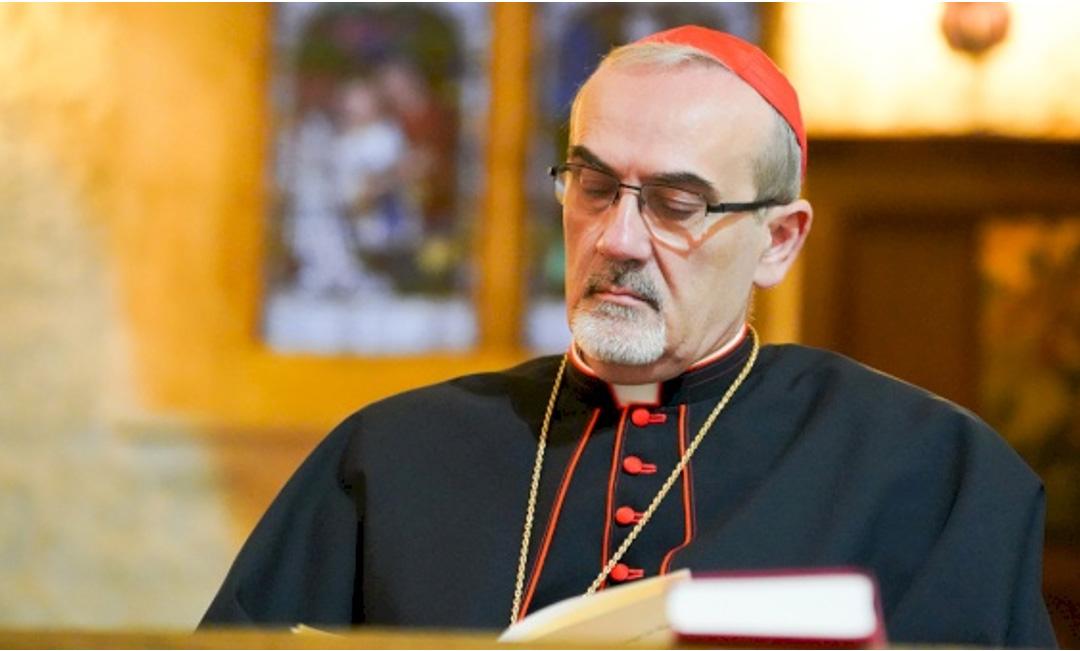
The four visits of Cardinal Pierbattista Pizzaballa, Latin Patriarch of Jerusalem, to Gaza were far more than ceremonial or symbolic gestures. They were bold, frontline acts of solidarity in the heart of danger, at a time when Gaza was left alone under relentless bombardment.
On multiple occasions, during periods of escalation and open conflict, Pizzaballa chose to bypass barriers to reach his flock—not as a church official performing a formal duty, but as a shepherd who believes that presence in times of fear is both an act of faith and a moral responsibility. His most recent visit took place on Friday, December 19, 2025, in a pastoral visit on the threshold of Christmas.
A Reminder of Responsibility
While many managed Gaza’s crisis from a safe distance, issuing carefully worded statements balancing conscience and interest, the besieged city often became a deferred issue or a pawn in cold diplomatic calculations. In this context, the cardinal’s arrival in Gaza was a direct challenge to absence and a reminder that human suffering cannot be summarized in reports nor managed from behind office walls.
The Latin Patriarchate’s presence went beyond pastoral visits. It coincided with ongoing humanitarian and medical interventions, including support for affected families, provision of basic necessities, and assistance to medical efforts as far as possible amid the near-collapse of the healthcare system. These initiatives, quietly executed by patriarchate staff in coordination with parish priests and local church bodies, translated pastoral mission into concrete action, linking prayer with work and solidarity with responsibility.
The Philosophy of Presence
Theologically, these visits embody the essence of Christian faith grounded in incarnation. God did not redeem humanity from afar; He entered human weakness and suffering. In this light, the cardinal’s visits to Gaza represent a practical expression of an incarnate church—choosing proximity over rhetoric and accompaniment over verbal solidarity.
Humanly, this presence conveyed reassurance to a city exhausted by war and bereft of hope. Cardinal Pizzaballa’s meetings with priests, parishioners, and neighbors of the Holy Family parish were not mere inspection rounds but affirmations that their suffering is remembered and their belonging to this land is non-negotiable.
In his address to the people of Gaza, the cardinal summarized this philosophy:
"We will not forget what happened, but we look forward. We will rebuild our homes and schools, and we will reconstruct our lives. We are here, we will remain here, and we aspire to be a steadfast reference. Amid this sea of destruction, we strive to become an example to all of what rebuilding truly means."
An Ethical Challenge
These visits also pose a clear question to local, regional, international, and even some church institutions: What is solidarity if conditional? What is the value of positions not translated into presence when needed? The war has once again shown that many humanitarian statements collapse under the test of the field, and that silence or distance, no matter how politely phrased, remains a form of abandonment.
In the Gospel, not only cruelty is condemned, but also those who ignore others and pass by on the other side of the road are held accountable. Thus, the visit to Gaza is not only pastoral but serves as a moral reminder and accountability benchmark. It sets a clear standard for leadership: a true leader does not manage crises from afar but reaches out to reassure his people, even when the path is fraught with danger.
Cardinal Pizzaballa’s visits stand as a living testament to a church that chooses to remain with its people—not above them nor outside them. In a city where the sounds of war are deafening and human isolation is magnified, this presence is a silent declaration: Gaza is not marginal, and rebuilding begins with steadfastness, hope, and refusing to leave the victims alone in darkness.